


Within the framework of trade commitments established for the 2025-2027 period, Vietnam has encouraged businesses to diligently implement purchasing agreements with US partners totaling approximately $3 billion.
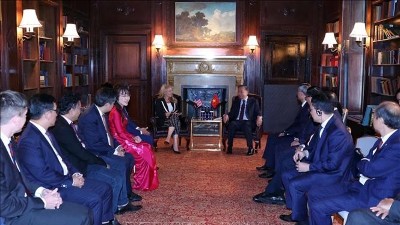
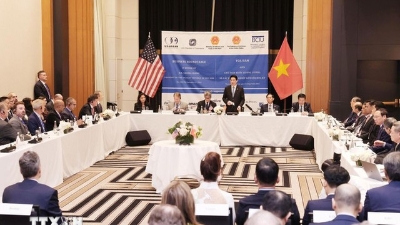
The information was announced during a bilateral meeting between Vietnamese Deputy Minister of Agriculture and Environment Dang Ngoc Diep and Deputy Secretary of the US Department of Agriculture (USDA) Stephen Vaden on November 10, coinciding with the largest US agricultural trade promotion delegation's visit to Vietnam.
Breakthroughs in agricultural trade
According to Mr. Diep, all agreements have been executed, significantly exceeding the committed value. In the latter half of 2025 alone, the total import turnover of products under signed memoranda of understanding reached approximately $2.1 billion. For the first nine months of 2026, the value of purchases amounted to approximately $2.8 billion, of which about $2.5 billion comprised committed items including milk and dairy products, livestock products, fruits and vegetables, corn, soybeans, animal feed, and raw timber.
In addition to promoting imports, Deputy Minister Diep requested the US to address certain market access issues for passion fruit and to promptly approve hot vapor treatment measures for fresh fruit exports to the US.
Acknowledging the significant growth aimed at balancing bilateral trade, USDA Deputy Secretary Stephen Vaden noted that amidst negotiations for a reciprocal trade agreement, the US had proposed Vietnam increase its annual import turnover of goods by an additional $1 billion. In reality, after only 10 months of 2026, Vietnam had already imported approximately $3.6 billion, not including about $1.4 billion in cotton imports.
Mr. Vaden also praised the agricultural trade relationship between the two countries, stating that agricultural products from both Vietnam and the US are favored by consumers in each nation.
The delegation includes a large number of producers of specialty agricultural products, fruits, and vegetables, with many businesses from California, he said, adding that the presence of these businesses demonstrates the US's desire to expand market access opportunities in Vietnam and to foster a more substantive trade relationship.
Promoting cooperation in biotechnology and food safety
During the meeting, both sides also discussed enhancing scientific and technological cooperation.
"This could become a new pillar," Mr. Diep said. "Vietnam wishes to promote cooperation with the US in areas such as crop varieties, biotechnology, artificial intelligence, big data, precision agriculture, and digital transformation."
Specifically, the Deputy Minister proposed that both sides research and implement cooperation programs and technology transfer for disease-resistant, drought-tolerant, and salt-tolerant crop varieties, suitable for climate change adaptation.
In response to this proposal, Deputy Secretary Vaden affirmed the US's readiness to cooperate in providing Vietnam access to biotechnology. He commended Vietnam's interest in applying scientific principles in agricultural management and production, and welcomed the initiative to facilitate US companies in bringing research and development (R&D) activities to Vietnam.
He also expressed hope that Vietnam would continue to collaborate with the US in promoting a science-based approach to biotechnology, thereby expanding the application of modern agricultural technologies.
Regarding food safety, Mr. Vaden highlighted similarities in the work programs of both ministries, particularly concerning Salmonella control and DNA residue testing requirements for imported products. The US expressed its desire to continue discussions with Vietnam on regulations related to Salmonella and DNA residue testing, aiming to reduce instances of rejected shipments while ensuring state management responsibilities for food safety.
Currently, the USDA is developing a new framework for Salmonella risk assessment thresholds, aiming to balance consumer health protection requirements with trade facilitation.
The US wishes to coordinate with Vietnamese specialized agencies to discuss and review technical requirements, avoiding unnecessary disruptions in the flow of goods, said Mr. Vaden, stressing that ensuring that Vietnamese and US consumers have access to safe food, while management regulations do not become unnecessary barriers to trade.




 Google translate