


The People's Committee of central Nghe An Province has issued Plan No 1039/KH-UBND to implement the Ecosystem for Leveraging Free Trade Agreements (FTAs) for the 2026-2030 period, with a vision toward 2035.
The plan aims to establish a comprehensive support mechanism that connects government agencies, businesses, cooperatives, household enterprises, and support organizations. Through this ecosystem, stakeholders will be better positioned to take advantage of FTA incentives, expand market access, and increase the value of export goods.
To achieve this goal, Nghe An targets ensuring that 100% of ecosystem members receive support and access to at least one relevant area of assistance, including FTA policies and commitments, rules of origin, import market standards, supply chain and value chain connectivity, logistics, science and technology, traceability systems, digital transformation, green transformation, and sustainable development.
To implement the initiative, the province will establish a Working Group for the FTA Ecosystem, with the local Department of Industry and Trade serving as the standing agency.
Notably, Nghe An will develop a database covering enterprises, business establishments, industry associations, and support organizations, classified by sector, market, origin compliance capacity, standards, and business needs. Data management is considered a fundamental tool for accurately identifying target beneficiaries, assessing obstacles in FTA utilization, and designing support measures that closely match real production and business conditions.
Participation in the ecosystem will be expanded beyond current exporters to include cooperatives and household businesses with export potential. Priority will be given to key export sectors that possess competitive advantages, can meet import market requirements, and have strong prospects for deeper integration into global supply chains.
From local producers to links in global supply chains
One of the plan's most noteworthy features is that Nghe An does not intend merely to disseminate FTA information or assist businesses with procedures for obtaining preferential treatment. Instead, the province aims to strengthen production, processing, and market connectivity capabilities. This long-term approach seeks to address a fundamental challenge: enabling local enterprises to move deeper into value chains rather than remaining suppliers of raw materials or exporters of low-value-added products.
According to the plan, the province will implement seven major groups of tasks and solutions, focusing on: Improving organizational and coordination mechanisms; reviewing, assessing, and guiding ecosystem members; evaluating and selecting support beneficiaries; providing information, training, and capacity-building for FTA utilization; developing value chains and markets; guiding access to policies and mobilizing resources; and building databases and evaluating implementation effectiveness.
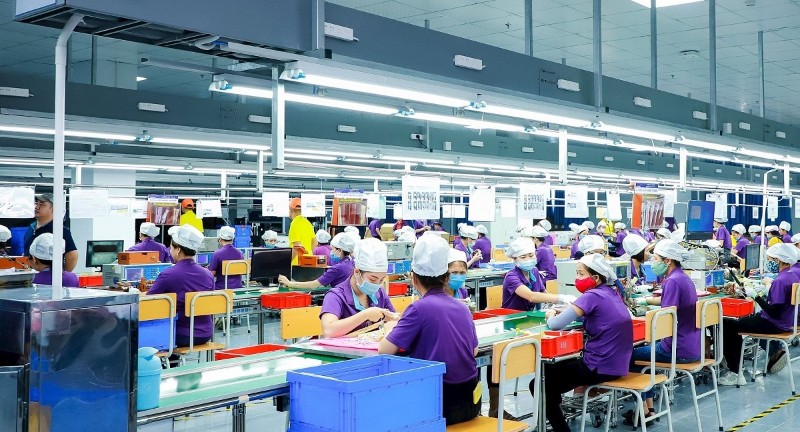
In the industrial sector, the province plans to assess procurement needs and technical standards of foreign-invested enterprises (FDIs) and lead firms, particularly in electronics, semiconductors, high technology, and supporting industries. Based on these findings, domestic enterprises will receive assistance in improving corporate profiles, upgrading production processes, meeting higher standards, conducting product testing, and strengthening supply-demand linkages.
FDI enterprises will be encouraged to participate in training programs, share technical requirements, transfer knowledge, and help develop domestic supplier networks. This approach is expected to enhance connections between local businesses and multinational corporations as well as foreign-invested enterprises, gradually increasing the participation of Vietnamese firms in domestic and global production chains.



 Google translate