


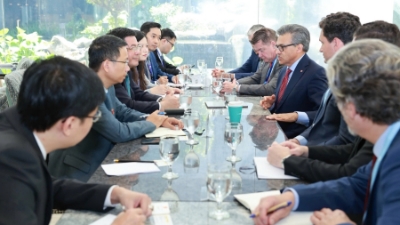
The Vietnam Trade Promotion Agency (VIETRADE) under the Ministry of Industry and Trade (MoIT), in coordination with the Trade Facilitation Office (TFO) Canada, on November 25 launched the “Trade for Resilient, Inclusive and Sustainable Economic Growth” (TRISEG) initiative.
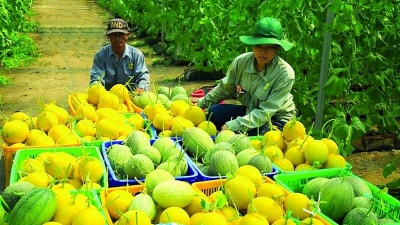
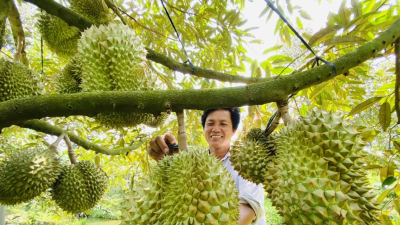
Funded by the Government of Canada through Global Affairs Canada (TFO Canada), the nationwide project runs from 2026 to 2030, focusing on capacity building for small and medium-sized enterprises (SMEs), particularly in the agricultural and processed food sectors.
Speaking at the launch, Mr. Dao Viet Anh, Head of the International Relations Division at VIETRADE, noted that while the CPTPP opens substantial market room, tariff cuts do not automatically generate orders.
A preliminary survey of 30 SMEs (including 26 exporters) revealed that although 23 exporters rated their understanding of the Canadian market as average or above, 18 had experienced shipment rejections, delays, or lost contracts over the past 24 months, and only seven met all import requirements.
Products entering Canada face strict rules from the Canadian Food Inspection Agency (CFIA) regarding phytosanitary standards, pesticide residue limits, traceability, and labeling, alongside buyer-mandated certifications such as GlobalG.A.P., HACCP, and the Canada Organic Regime. Moreover, 17 of the 26 exporters encountered new buyer requirements, with 14 still struggling to upgrade their systems.
Digital readiness and financing also remain major bottlenecks. Survey findings showed that 23 of the 30 firms had yet to adopt online sales, while 19 exporters still managed customer data manually or via basic spreadsheets.
Financially, many small exporters face collateral shortages and interest rates exceeding 10 percent against export profit margins of just 5 to 7 percent. All 20 surveyed respondents viewed partial credit guarantees or blended finance as highly beneficial, especially as 18 could self-finance at most 25 percent of project costs.
From an inclusion standpoint, Ms. Francesca Bellone, Head of Cooperation at the Embassy of Canada in Vietnam, stressed the need to prioritize gender equality, noting that women-owned enterprises lag behind in securing long-term contracts and meeting import standards.
To ensure practical impact, Ms. Ta Thu Ha from the MoIT’s Department of Foreign Market Development and Multilateral Trade recommended mobilizing local consultants who understand domestic business realities alongside international experts.
Through a unified database and coordinated support network, TRISEG aims to measure success not by training headcounts, but by improved compliance, fewer rejected shipments, and sustained export contracts.





 Google translate