


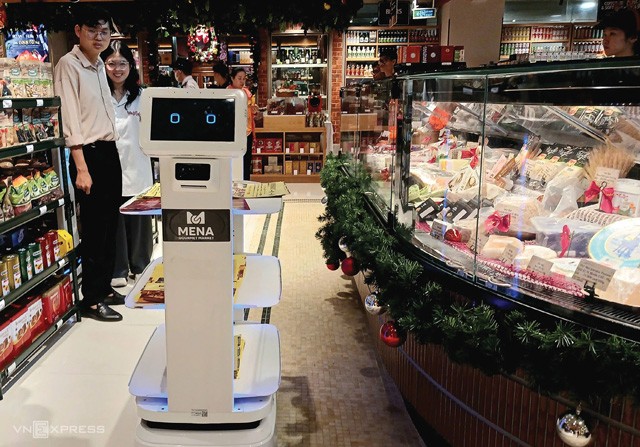
Vietnam’s peak shopping season is extending beyond individual sales events, spanning major shopping festivals in the final quarter before moving into year-end period and the Tet (Lunar New Year) holiday. For businesses, this creates a longer window to engage customers across successive periods of demand.
According to Meta’s Holiday Shopping Study, conducted by Ipsos across 18 markets, Tet remains Vietnam’s dominant shopping occasion, with 85 per cent of respondents shopping at that time. The corresponding figures are 66 per cent around western New Year’s Day and 44 per cent around the 12.12 online shopping event.
The extended shopping calendar, which includes 10.10, 11.11, and 12.12, is also changing how businesses approach consumers. Rather than concentrating resources around individual promotional events, businesses increasingly need to remain relevant throughout the customer journey, providing timely information, recommendations, and support as demand develops.
Moving ahead
Messaging has become an important channel for Vietnamese consumers to communicate with businesses. Kantar research commissioned by Meta shows that 61.2 per cent of Vietnamese online adults message a business every day, while 82.8 per cent say messaging is their preferred way of communicating with businesses.
Consumers are also increasingly open to personalized and AI supported interactions. Some 85.6 per cent say they like receiving personalized messages about products, services, discounts, and sales opportunities, while 80.8 per cent believe AI agents can provide recommendations that are relevant to them.
At the same time, 70.2 per cent say they receive too many messages from businesses. For companies, the challenge is therefore not simply to increase customer interactions, but to make them more relevant, timely, and useful.
Meta’s platforms already play a significant role in Vietnam’s peak season shopping. According to the Meta-commissioned Ipsos study, 63 per cent of Vietnamese consumers turn to Facebook when connecting with businesses during peak shopping periods, compared with 33 per cent globally. Facebook Messenger is used by 58 per cent of Vietnamese consumers, compared with 30 per cent globally.
The figures point to a market where social platforms and messaging are already closely connected with product discovery, customer engagement, and purchasing decisions. The next question is how AI can be integrated into these interactions without simply increasing the volume of automated communication.
Mr. Khoi Le, Country Director of Meta in Vietnam, noted that Vietnam has an opportunity to further develop social commerce as AI becomes more directly involved in interactions between businesses and consumers.
“Vietnam is a highly-dynamic market where consumers are increasingly comfortable engaging with businesses through messaging, while expectations for faster and more personalized experiences continue to grow,” he said. “Vietnam is one of the pioneering markets in applying AI to business activities on social platforms, or what we call Agentic Social Commerce.”
AI, he continued, can help businesses of different sizes respond to changing customer expectations and turn conversations into business outcomes. He also encouraged businesses to test AI supported solutions, assess what works for their customers and provide feedback as the technology develops.
The concept marks a shift from earlier applications of AI in social commerce, which focused largely on content creation, advertising and data analysis. AI is now increasingly being positioned within the customer journey itself, responding to questions, recommending products, handling routine enquiries, and supporting transactions.
This could be particularly relevant to small and medium-sized enterprises (SMEs), which often face constraints in human resources and operating capacity. According to Meta, 96 per cent of Vietnamese SMEs surveyed already use AI, while six in ten want more employee training.
The potential value is therefore not necessarily in replacing employees, but in allowing them to focus on work requiring human expertise and judgement.
Better customer experience
The next stage is taking AI beyond automated responses and into sales and customer service processes. “The question is no longer whether businesses can access AI, but how effectively they deploy it,” said Mr. Nguyen Viet Anh, Chief Technology Officer at PMAX.
For businesses, this means identifying where AI can be integrated into existing operating processes rather than treating the technology as a separate experiment. Clear sales and customer service processes need to be established and translated into AI supported workflows, while appropriate measures are required to assess their effectiveness.
This becomes particularly relevant during peak shopping periods, when customer enquiries can rise sharply. In livestream commerce, for example, AI can process customer messages, provide product information, recommend products, and support order conversion, allowing hosts and sales staff to concentrate on content and interaction with viewers.
Meta Business Agent illustrates this approach. The tool supports conversations across Messenger, WhatsApp, advertising, and business websites, answering questions and recommending products based on information provided by businesses. It can also transfer conversations to employees when human intervention is needed. Meta has said that more than 1 million businesses globally use Meta Business Agent each week on WhatsApp and Messenger.
For businesses, the more significant change is the integration of AI with existing operating processes. AI can be trained using information from websites, fan pages, product catalogues, and sales and customer service procedures. Businesses can also define response scenarios and conditions for transferring conversations to employees.
AI can also support parts of the transaction process. On Messenger, payments can be made through banking and e wallet applications from ACB, BIDV, MBBank, MoMo, OCB, and Techcombank, while businesses can train AI assistants to support customers during this stage.
Meta said users are informed when they are interacting with an AI agent. Early applications reported by Meta indicate the potential commercial impact. ELSA Speak uses Meta Business Agent on Messenger to qualify leads and support users in markets where it does not have local service teams. Meta says the application increased qualified leads by 26 per cent, reduced cost per qualified lead by 18 per cent, and increased average order value by 32 per cent.
For HADAKI, a Vietnamese e commerce brand specializing in sports and protective equipment, Meta said Business Agent increased conversion by 20 per cent and doubled its capacity to handle messages.
While these figures are reported by Meta rather than independently-verified measurements, they nevertheless point to a broader shift in the role of AI, from supporting marketing activities to handling parts of the commercial process itself.

Vietnam is one of the pioneering markets in applying AI to business activities on social platforms, or what we call Agentic Social Commerce. Consumers are increasingly comfortable engaging with businesses through messaging, while expectations for faster and more personalized experiences continue to grow. AI can help businesses of every size respond to these expectations and turn conversations into meaningful business outcomes.

Meta says more than 9 million small businesses globally use at least one of its AI supported advertising creative tools. The company also reported that investment through its Advantage+ advertising products reached $75 billion.
For small businesses, wider access to AI can reduce the resources required for activities such as content creation, customer engagement, and campaign optimization. However, technology adoption alone does not necessarily translate into business value.
The commercial test will ultimately be whether businesses can translate AI deployment into measurable outcomes such as faster response times, higher conversion, and more orders and revenue, rather than simply measuring technology adoption.
For Vietnam, this is particularly relevant given the combination of widespread messaging habits and the growing role of social platforms in product discovery and commerce. The country’s consumer behavior provides an environment in which AI can increasingly connect customer demand with business sales and service systems.
At the same time, the high level of messaging activity means that relevance will become increasingly important. Businesses that simply increase the volume of automated messages could face the same problem identified by the Kantar research, where consumers already report receiving too many messages.
The value of AI in social commerce will ultimately be measured not by adoption alone, but by its ability to improve the customer experience and generate measurable business outcomes. This marks a shift from AI as a marketing tool toward becoming part of the sales and service infrastructure that connects businesses with their customers.







 Google translate