


- Beyond the signing of an intergovernmental agreement on the construction of the Ninh Thuan 1 Nuclear Power Plant, in March 2026, what is Rosatom’s long-term strategy for expanding its presence in and cooperation with Vietnam?
Our strategy beyond Ninh Thuan 1 is to transition from supplying technology to a strategic partnership in key high-tech industries. We are building a national industrial framework around the plant and developing non-energy areas of cooperation. The key element is the Center for Nuclear Science and Technology (CNST) in Dong Nai, which will be a platform to produce radiopharmaceuticals and the neutron doping of silicon, which will guarantee sovereign Vietnamese nuclear medicine and form the basis for a semiconductor industry.
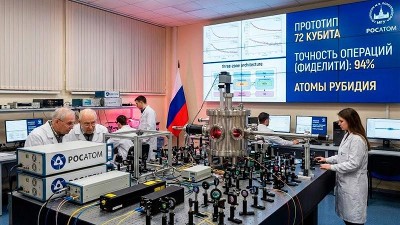
In parallel, we are developing related high-tech areas. The agreement with Petrovietnam on an Additive Manufacturing Center is an important step towards strengthening national competencies in industrial 3D printing in Vietnam. Cooperation in quantum technologies, energy storage, and logistics is also underway.
- What are the key priorities and next steps in implementing the Ninh Thuan 1 project?
Following the signing of the agreement on March 23, 2026, the legal framework for the entire life cycle of the project has now come into being.
The first priority is working with regulators. The legal basis is set out in the agreement, but actual work with the Vietnam Agency for Radiation and Nuclear Safety (VARANS) is a separate process. We already have joint experience with the Da Lat reactor, fuel supplies, and safety report preparation. We are training current regulator staff in nuclear and radiation safety and regulatory documentation, so that by the time the site is licensed we have a common language at the level of technical standards.
The second is nuclear education and personnel training. A Joint Working Group on human resources development for the needs of the project was established last year, with the associated plan now under development. We are also strengthening inter university cooperation through the organization of popular science lectures on the energy and non-energy applications of nuclear technologies for students and schoolchildren.
The third priority is infrastructure and localization. We involve Vietnamese companies in construction and logistics, and also prepare the basis for more complex competencies, from site preparation to automation and digital systems.
And the fourth cross-cutting priority is safety. The VVER-1200 of the “III+” generation is a technology with passive safety systems that work through the laws of physics, not through diesel generators or operator actions. The core catcher and double containment are all built into the design. But safety is a property of the system, not just of the hardware. That is why we work on regulation, personnel, and public acceptance in parallel.
- The CNST represents another important pillar of Vietnam - Russia cooperation. How will it contribute to Vietnam’s scientific research, technological capabilities, nuclear medicine, and peaceful application of nuclear energy?
The project roadmap has been agreed with our Vietnamese partners, and it has moved into the stage of detailed preparation for implementation. The Russian side has prepared and handed over to the Vietnamese side for review a comprehensive package of feasibility study materials.
The Center is designed not simply as a scientific facility, but as a national platform for technology transfer and the development of Vietnamese scientific and industrial capabilities. The heart of the CNST is a Russian-designed research reactor with a thermal capacity of 10 MW, with the possibility of further expansion to 15 MW.
The CNST will help bridge the gap between education and industry, creating a complete environment in which knowledge can be transformed into innovation, technological capabilities, and tangible benefits for Vietnam.
- On September 9, 2026, Rosatom’s Fuel Division and Petrovietnam signed an agreement to establish an Additive Manufacturing Center in Vietnam. What are the project’s main objectives and implementation milestones?
The agreement with Petrovietnam, signed in September this year in the presence of leaders from both countries, is not just a purchase of equipment but the creation of a fully-fledged additive technology ecosystem. The printer is an important but not the only part of the system.
The agreement already details delivery timelines and the list of equipment: 3D printers from Rosatom’s Fuel Division, equipment for heat treatment and turning, and laboratory analysis. We also intend to organize the production of metal powders in Vietnam and jointly develop quality standards, qualification procedures, and product certification. In the future, we are ready to discuss localizing the assembly of 3D printers in Vietnam for access to Southeast Asian markets.
- Looking ahead to 2030 and beyond, what are the most important milestones Rosatom hopes to achieve in cooperation with Vietnam?
If we talk about milestones towards the late 2030s, I can identify three key endeavors. The first is operating the Ninh Thuan 1 plant with stable 24/7 generation. The second is the CNST for medicine, semiconductors, and personnel training. And the third is the Additive Manufacturing Center, which lays a foundation for industrial 3D printing.
Why are these important? Nuclear energy is the foundation of other high-tech areas. Stable generation is a signal to investors that chip factories and data centers can be built here in Vietnam.
Cooperation is not limited to energy. We have already been successful in related industries - quantum technologies, energy storage, logistics, and the Northern Sea Route. All this works towards one goal: to make Vietnam not just an importer of technology, but a partner capable of using and developing it independently.


 Google translate