


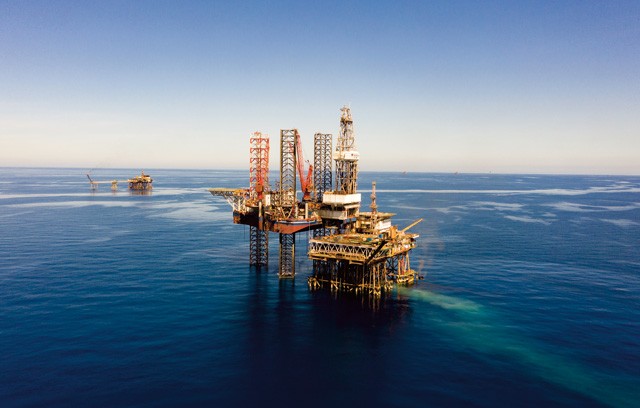
The industrial capabilities Vietnam has acquired from decades of oil and gas operations must be turned into a strategic asset for future development.
Vietnam’s oil and gas industry has developed a relatively complete ecosystem spanning exploration, production, processing, transportation, refining, offshore engineering, and technical services. Beyond its natural resources, decades of operations have built valuable industrial capabilities, including skilled personnel, engineering expertise, fabrication facilities, service vessels, and international partnerships. These assets provide a foundation for the country’s broader maritime economy.
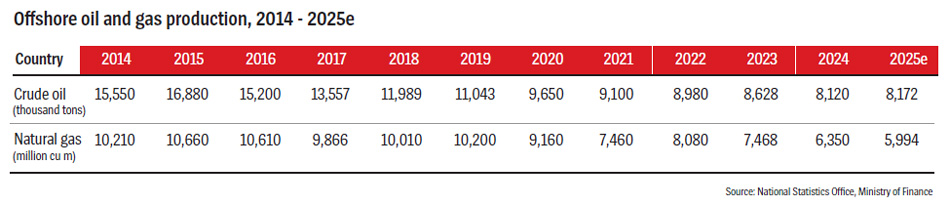
The country boasts estimated oil reserves of 4.4 billion barrels, ranking it first in Southeast Asia, while proven natural gas reserves total around 0.6 trillion cu m; the region’s third-largest. Since crude oil production began in 1986, the industry had extracted 450 million tons of crude oil and 193 billion cu m of natural gas as of the end of 2025. Operating across much of Vietnam’s continental shelf and its 200-nautical-mile exclusive economic zone, the industry contributes to energy security and the State budget while supporting the country’s sovereignty, sovereign rights, and jurisdiction in the East Sea.
As energy demand grows and pressure to reduce emissions intensifies, Vietnam faces the challenge of securing reliable energy supplies while preparing for a lower-carbon future. The strategic value of oil and gas lies not only in its resources but also in the industrial, technological, and offshore service capabilities that can be redirected toward emerging energy sectors and a more advanced maritime economy.
Navigating the energy transition
The global energy transition is reshaping energy systems through the rapid development of renewables, gas-fired power, energy storage, hydrogen, ammonia, carbon capture and storage, and offshore wind. For Vietnam, this transformation must be managed alongside rapid economic growth, rising electricity demand, continued industrialization, and the need for reliable energy supplies.
Politburo Resolution No. 70-NQ/TW, dated August 20, 2025, on national energy security through 2030, with a vision to 2045, calls for sufficient energy to support socio-economic development while promoting a modern, green, and sustainable transition. Oil and gas therefore remains part of the energy security equation during the transition, even as the industry must improve efficiency, reduce emissions, and redirect its capabilities toward emerging energy sectors.
The revised National Power Development Plan VIII (PDP8), approved in 2025, aims to meet electricity demand amid annual economic growth of around 10 per cent during 2026-2030. Commercial electricity consumption is projected to reach 500.4-557.8 billion kWh by 2030 and 1,237.7-1,375.1 billion kWh by 2050, highlighting the scale of Vietnam’s anticipated energy expansion.
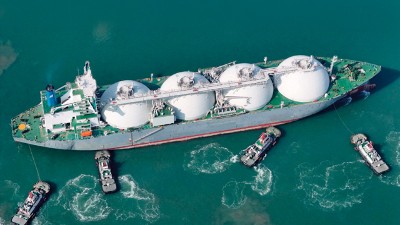
Oil and gas will continue to play a role. Natural gas, gas-fired power, and liquefied natural gas (LNG) can provide flexible generation as renewables account for a larger share of the electricity mix. Oil and gas also supply feedstocks for petrochemicals, materials, transportation, and manufacturing. Their value will not disappear overnight.
However, the industry’s role must evolve. Beyond increasing production, priorities must include investment efficiency, recovery rates, operational safety, methane reduction, less gas flaring, optimized energy consumption, and lower emissions throughout the value chain. The objective is to develop resources with higher value, lower emissions, and greater efficiency, shifting from resource extraction toward energy asset management.
This is increasingly important as easily accessible resources decline, new fields lie farther offshore, geological conditions become more complex, and development costs rise. Small and marginal fields may become economically unviable without flexible development mechanisms, despite their potential contribution to energy security.
Oil and gas policy must therefore pursue two complementary objectives: developing economically-viable resources responsibly while preserving and upgrading industrial capabilities for emerging energy sectors.
Offshore capabilities
One of the industry’s most significant achievements has been its growing ability to manage more stages of the offshore project value chain. Over decades of operations on Vietnam’s continental shelf, Vietsovpetro has developed a workforce of approximately 8,000 employees, engineers, and skilled workers with international-level expertise. Its capabilities span seismic interpretation, exploratory drilling, field development, offshore engineering, fabrication, installation, and production.
The PetroVietnam Technical Services Corporation (PTSC) has also developed extensive capabilities in engineering, procurement, and construction (EPC) and engineering, procurement, construction, and installation (EPCI). These capabilities are increasingly reaching international markets. In 2025, PTSC recorded consolidated revenue of VND33.79 trillion ($1.3 billion) and pre-tax profit of VND2.205 trillion ($84.8 million). It completed and handed over 42 energy projects, with total fabrication volume exceeding 107,000 tons, including projects for export markets.
This marks an important shift: Vietnamese oil and gas companies are moving beyond serving the domestic industry to supplying offshore facilities and services to international energy value chains.
The Law on Petroleum 2026 has further clarified PetroVietnam’s role in the national energy ecosystem, creating conditions for more proactive asset management, value chain development, and industrial transformation. This could help the group evolve from a business focused primarily on oil and gas extraction into an industrial and energy conglomerate operating across emerging sectors.
The industry’s strategic importance extends beyond the resources beneath the seabed. Oil and gas development has required Vietnam to operate in demanding environments far from shore, where conditions are harsh, risks are high, technologies are complex, and international standards and stringent safety requirements apply.
In the future, oil and gas facilities could coexist with offshore wind farms, power cables, substations, energy storage systems, energy ports, marine research facilities, service vessels, and subsea equipment. The traditional oil and gas industry could gradually expand into a broader energy and offshore industry.
If successful, Vietnam will not only extract resources from the sea but also export its industrial capabilities. This is the logic of capability transition, complementing the energy transition. It could reduce emissions while creating new industries, jobs, technologies, and export markets. The oil and gas industry’s accumulated expertise should therefore be recognized as part of the country’s industrial capital.
Vision for 2045
To turn the oil and gas industry’s legacy into a new growth driver, Vietnam must shift from supporting individual projects to building national capabilities. Five priorities are critical: engineering and technology; fabrication and materials; deepwater technologies and robotics; operations and maintenance; and safety, environmental protection, and risk management.
Workforce development must underpin these priorities. Vietnam needs interdisciplinary training that integrates petroleum and mechanical engineering with electrical engineering, automation, materials science, robotics, oceanography, data science, and environmental studies.
The sea is not merely a source of oil and gas, fish, minerals, or scenic landscapes. It is also a platform for industry, energy, logistics, science, data, technology, and high-value services. Oil and gas could play a distinctive role as both a resource provider during the transition and a foundation for developing Vietnam’s offshore industrial capabilities.
The industry’s accumulated expertise must be converted into new competitive advantages. Within the broader goal of becoming a strong maritime nation by 2045, Vietnam should treat oil and gas not only as a resource extraction industry but also as a foundation for developing next-generation marine industries.
This requires coordinated action across several areas: develop resources responsibly; transition industrial capabilities; build offshore energy hubs; expand the offshore wind supply chain; invest in marine technologies; integrate offshore asset data; strengthen governance; train a next-generation workforce; help domestic enterprises move up the value chain; and use the sea without compromising its future.
The goal for 2045 is neither to perpetuate resource extraction indefinitely nor to dismiss oil and gas during the transition. It is to turn resources into capabilities, capabilities into industries, industries into competitiveness, and competitiveness into national maritime strength.
This is the path for Vietnam to move from being a country with simply a coastline to becoming a strong maritime nation, as set out in Resolution No. 20-NQ/TW, dated July 28, 2026, from the 14th Party Central Committee. For the oil and gas industry, that means looking beyond resources beneath the seabed toward industrial, technological, and offshore service capabilities that can support emerging maritime industries.
Oil and gas must therefore be understood as part of a broader energy industry and maritime economy, in which resources, technology, infrastructure, enterprises, and marine space form an integrated whole.





 Google translate