


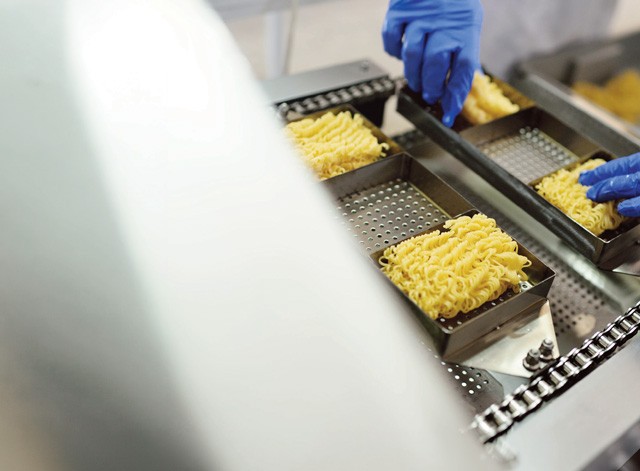
According to the Ministry of Health (MoH), the Law on Food Safety 2010 exhibited several limitations in addressing emerging practical requirements during its 15 years of implementation. Consequently, proposed amendments to the legislation are about more than simply determining whether a food product is safe. More importantly, they seek to identify where risks arise, at which stages of the supply chain, who is responsible, and how quickly incidents can be traced, contained, and addressed when they occur.
Against this backdrop, the proposed amendments focus on reforming the management approach, shifting decisively from pre-market inspections to post-market inspections and adopting risk-based management supported by a national food safety information and data system. They also seek to clarify responsibilities and address fragmentation in State management over food safety.
Addressing issues
During a group discussion at the second session of the 16th National Assembly on October 24, Minister of Health Dao Hong Lan emphasized that revising the Law was a challenging task because of the wide variety of food products, the large number of stakeholders affected, and its direct implications for public health and businesses’ production and commercial activities.
During the drafting process, the MoH held more than 60 meetings and consulted ministries, sectors, local authorities, and industry associations. “The overarching objective of the draft is to put people’s health above all else and make it the foremost priority,” Minister Lan said. However, State management agencies must also strike a balance between protecting consumers’ food safety and creating a favorable environment for production and business activities, without imposing unnecessary obstacles or compliance costs on enterprises.
The proposed amendments must therefore address problems that have emerged in practice, prevent regulatory gaps during implementation, and meet both domestic requirements and international standards for the trade in goods.
Accordingly, the draft Law on Food Safety (revised) sets out several key policy areas, including food safety management through risk-based controls across the supply chain; administrative procedure simplification; digitalization and the development of an interconnected national food safety information and data system; regulation of food products sold through e-commerce platforms; and the designation of a lead agency responsible for State management of food safety.
Regarding supply chain management, Minister Lan said businesses with strong compliance records could be considered for less frequent inspections, while those with repeated violations would be subject to warnings, production process inspections, and public disclosure, enabling consumers to make informed decisions and take steps to protect their health and avoid potentially unsafe products.
However, implementing this approach requires regulators to have an information system capable of maintaining comprehensive records of each enterprise’s operations, violations, and product recalls. Requiring products to be re-registered and re-declared every five years is also intended to update compliance records and support post-market inspections.
Minister Lan said the draft Law provides for an automated registration process through the national food safety information and data system. Businesses would submit their documentation electronically and could continue normal production activities. The data submitted would also help regulators promptly identify businesses exploiting regulatory provisions to circumvent the law or engaging in fraudulent production and business practices. “Automated data submission will reduce administrative procedures and will not create difficulties for businesses,” she affirmed.
Modern management system
Ms. Lan noted that addressing all food safety issues could not be the responsibility of a single agency or the health sector alone. Ministries, sectors, and local authorities must work together. In particular, ensuring that the new policies are practical and that the food safety management system operates effectively will require interagency coordination mechanisms, qualified personnel at the grassroots level, and investment in equipment, infrastructure, and testing systems.
Drawing on international experience, Dr. Angela Pratt, World Health Organization (WHO) Representative in Vietnam, said food safety regulatory frameworks have traditionally focused on responding to acute risks such as foodborne diseases, food contamination, or chemical hazards. These remain essential priorities, but the current revision of the Law on Food Safety also presents an opportunity for Vietnam to strengthen its food safety management system and improve its capacity to prevent, detect, and respond effectively to risks.
According to Dr. Pratt, the draft Law introduces important amendments to strengthen the food safety management system. However, one issue requiring particular attention is clearly defining which government agency is responsible for each function and stage of the management system. Prevention and early detection, including mechanisms for responding as soon as warning signals have been verified, can make a significant difference in limiting the impact of incidents on public health.
On this basis, WHO recommends further strengthening a unified food safety management model, clarifying the MoH’s coordinating role and the responsibilities of individual agencies, while establishing mechanisms for coordination, accountability, and quality management.
In addition to controlling unsafe food products, WHO also recommends greater attention to the risks associated with unhealthy foods. This could include considering clear warning-label requirements for products high in salt, sugar, and fat, as well as restrictions on the aggressive marketing of unhealthy products, particularly campaigns targeting children.
Dr. Pratt also said a modern food safety management system must address both traditional risks, such as contamination and food poisoning, and emerging challenges associated with unhealthy foods. Alongside improvements to the legal framework, WHO emphasizes the need to strengthen the accountability of regulatory agencies, enhance monitoring and response capabilities, and promote policies that help people make safe and health-conscious food choices.
Overall, WHO considers the proposed amendments to the Law on Food Safety an important opportunity for Vietnam to build a more modern food safety management system. Dr. Pratt expressed hope that the completion and implementation of the revised Law would help reduce preventable risks, protect people’s health, and promote sustainable improvements in public health.
The draft Law has been submitted to the National Assembly. The MoH took into account as many opinions as possible and carefully considered the proposed provisions, while maintaining the overarching principle of putting people’s health and lives above all else.
Finalizing the draft is seen as the starting point for a new management approach aimed at improving disease prevention and public health protection, simplifying administrative procedures, and fostering a business environment that is more open, transparent, and sustainable.
State management agencies must also strike a balance between protecting consumers’ food safety and creating a favorable environment for production and business activities, without imposing unnecessary obstacles or compliance costs on enterprises.





 Google translate