


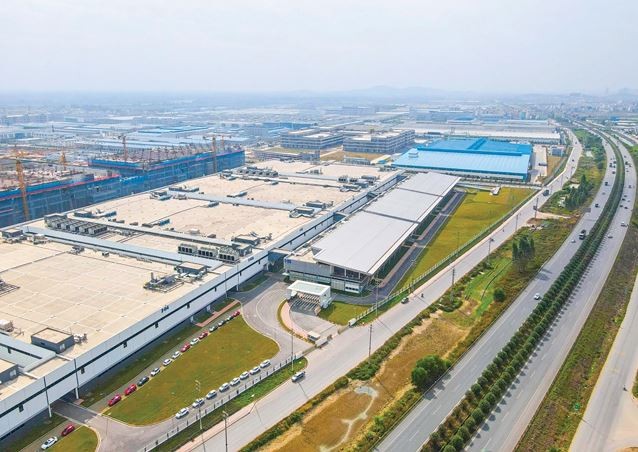
According to data released by the Foreign Investment Agency under the Ministry of Finance (MoF) at the end of 2025, Vietnam had 477 established industrial parks (IPs) with a total planned land area of around 146,000 ha and an industrial land bank of approximately 101,600 ha. Another 153 IPs were under construction and developing infrastructure. However, across the total industrial land bank of some 101,600 ha, the average occupancy rate stood at just 53.2 per cent, leaving approximately 47,500 ha of industrial land still available.
By the end of 2025, the IP system had also become a major employment hub, with around 4.15 million people working directly within parks. The sector has become a key contributor to government revenues, exports, and overall economic growth.
Evolving industrial landscape
Looking at the functional and geographical distribution of the country’s 478 IPs, the system can be divided into three groups, each with a distinct economic role.
First, 421 IPs are located outside of economic zones. This is the largest and most widely distributed segment of the system, closely connected to major urban centers, key transport corridors, and logistics hubs. These IPs primarily serve to attract manufacturing and support industries while creating local employment.
Second, 49 IPs are located within coastal economic zones. Though they account for only around 10 per cent of the total, these IPs play a particularly strategic role in an open economy. Located in coastal economic zones with access to deep-water ports, they serve as hubs for large-scale and heavy industries, energy, integrated port and logistics services, and cross-border export-oriented manufacturing value chains.
Third, eight IPs are located within border gate economic zones. Positioned at key border crossings, these parks are closely linked to border trade, logistics, and export-oriented manufacturing, serving as direct overland gateways to neighboring markets such as China, Laos, and Cambodia.
In terms of development progress, 324 of the 477 established IPs were operational while 153 were still under construction. This indicates that Vietnam’s IP system had entered a new phase by the end of 2025. The strategic challenge is no longer simply how many new IPs can be developed, but how to maximize the efficiency of existing parks and improve their overall quality.
According to figures presented at the Industrial Parks Forum 2025, the average occupancy rate across the entire system was 53.2 per cent, leaving approximately 47,500 ha of industrial land available. This suggests that Vietnam does not face an absolute shortage of industrial land at the national level. The bigger challenges lie in location, infrastructure quality, connectivity, service provision, and the ability to meet the requirements of different types of investors.
However, a September 2025 report from the National Institute for Economics and Finance at the MoF highlighted a significant gap between national average figures and actual absorption in key economic regions.
The occupancy rate of operational IPs stood at around 75 per cent. In key northern provinces, the rate reached approximately 83 per cent, supported by strong demand from electronics, semiconductors, machinery, and support industries, as well as direct connections with East Asian and Chinese supply chains. In key southern provinces, occupancy reached as high as 92 per cent, reflecting the region’s long-established industrial base, deep FDI ecosystem, seaport network, and abundant labor supply.
The ready-built factory (RBF) segment also recorded very high occupancy rates, at 88 per cent in the north and 89 per cent in the south. This creates a critical challenge: the locations best positioned to attract FDI, with the most developed transport infrastructure and logistics connectivity, are also those where high-quality industrial land is becoming increasingly scarce.
By contrast, much of the remaining 47,500 ha is located in more remote areas where connectivity infrastructure remains limited. Vietnam therefore does not lack industrial land in absolute terms. The greater challenge is ensuring the right locations, infrastructure quality, connectivity, and ability to meet the increasingly stringent requirements of different investors.
Shaped by FDI
The development of Vietnam’s IP system has always been closely linked to FDI flows. Data for the first eight months of 2025 put total registered FDI at $26.14 billion, up 27.3 per cent year-on-year, while disbursed FDI reached $15.4 billion, up 8.8 per cent.
Manufacturing and processing continued to dominate FDI inflows, explaining why demand for IPs has continued to remain strong. This momentum was also reflected in the Index of Industrial Production (IIP), which increased 9.2 per cent in 2025, while manufacturing and processing grew 10.5 per cent.
However, the investment attraction model is undergoing a profound shift. Under the traditional FDI model, the operating chain was relatively straightforward: secure serviced land, build a factory, recruit low-cost labor, conduct contract manufacturing, and export the finished products.
The new-generation FDI model, by contrast, has expanded into a complex ecosystem encompassing modern IP infrastructure, green energy and digitalization, smart logistics services, a highly-skilled workforce, domestic support enterprises, advanced technologies, R&D, innovation, and direct participation in global value chains.
Against this backdrop, an IP is no longer simply “a piece of land with technical infrastructure for lease.” It has become an integral component of the industrial base, FDI flows, import and export trade, urbanization, logistics infrastructure, domestic supply chains, government revenues, and national GDP growth.
From IP 1.0 to IP 2.0
Using 2025 as a reference point, the evolution in service quality and operating models across Vietnam’s IP system can be understood as a shift from IP 1.0 to IP 2.0.
Traditional IPs, or IP 1.0, focused on providing serviced land with basic infrastructure such as roads, electricity, and conventional water supply. They sought to attract as many companies as possible based on low-cost labor and simple assembly and contract manufacturing. These parks typically operated as standalone developments, with waste treated at the end of the production process. FDI was placed at the center of the model, with success largely measured by occupancy rates.
New-generation IPs, or IP 2.0, instead seek to build complete manufacturing ecosystems based on smart infrastructure, green energy, and digital transformation. The model focuses on attracting the right high-tech companies and requires highly-skilled workers to support technology, R&D, and design activities.
IP 2.0 developments are connected through industry clusters, apply circular economy principles, and promote industrial symbiosis between FDI companies and domestic enterprises to increase local value creation within global value chains. The measure of success is shifting from land occupancy to value creation per unit of land. This represents a transition from “IPs to attract FDI” to “IPs to build national productive capacity.”
To achieve its strategic objectives, Vietnam aims to increase the number of IPs to around 600 by 2030, with a total planned area of approximately 181,000 ha. However, the challenge for the 2026-2045 period is not simply to expand the number of IPs, but to improve the quality of their operations. Realizing this new vision will require policymakers and local authorities to address a series of practical questions.
(*)Dr. Phan Huu Thang is the former Director General of the Foreign Investment Agency under the Ministry of Planning and Investment (now the Ministry of Finance.







 Google translate