


- Since your arrival in Vietnam, what has impressed you most about the country’s way of life and the pace of its development?
Before answering, I want to tell you how happy I have been since arriving in Vietnam. Every morning when I wake up, I feel fortunate to be doing the job I do. I know that I will be discovering extraordinary people and experiencing something quite unique in the life of an ambassador: the privilege of arriving in a country where so many incredible things are happening.
To answer the question, I would say that two things have particularly impressed me since my arrival in Vietnam. The first is the country’s hospitality, and the second its economic dynamism. And the two are closely connected.
When a nation has confidence in itself and in its future, it can welcome the whole world. That is what Vietnam is doing today. The country is confident in its development and can therefore welcome everyone who wishes to visit the country or invest here in a very open and generous manner, while remaining selective if it wishes.
There is what we know about Vietnam through figures and statistics, and then there is what we discover first-hand every day when walking through the streets of Hanoi, Ho Chi Minh City, and other parts of the country. That is precisely what I would like to highlight. What we read in the statistics is something we can subsequently see for ourselves on the ground.
We all know that Vietnam has come a long way. At the time of the launch of “Doi Moi” (Economic Renewal), its GDP stood at only around $26-30 billion. It has increased 20-fold since, reaching approximately $514 billion in 2025. This is something we may know in an abstract sense before arriving in the country. But once we are here, we can see the tangible manifestations of this transformation.
It is an extraordinary expansion that economists today describe as a genuine development miracle. In the history of the global economy, Vietnam is among the countries that have reduced the number of people living on less than $2 a day - the international poverty threshold - at the fastest rate.
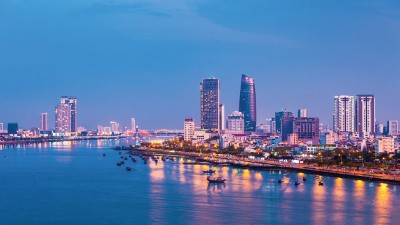
I saw this transformation first-hand. When I first visited Vietnam more than 15 years ago, bicycles were still common in Hanoi and Ho Chi Minh City. Today, the streets are filled with motorbikes, electric scooters, and modern electric taxis. The skylines could almost be those of New York, Shanghai, or Paris, while Metro Line 3 reflects the infrastructure of major European cities. And when I walk around Hanoi, I can do my shopping in some of the most modern stores while also discovering the country’s most traditional temples. The real luxury is not having to choose between modernity on the one hand and one’s history and heritage on the other.
This is something I feel very strongly. As an ambassador in Vietnam, you quickly become eager to discover as much as possible and meet as many people as possible.
- Following the recent high-level visits and the adoption of the 2026-2028 Action Plan, what concrete outcomes would you most like to prioritize in Vietnam-France relations?
I am fortunate to have a fairly clear roadmap outlining the priority areas of our bilateral relationship.
When I presented my credentials to Party General Secretary and State President To Lam, he reiterated what should remain at the heart of our relationship. We therefore start from an exceptionally solid foundation on which we can build: people-to-people ties.
For example, during his visit to Paris, Party General Secretary and State President To Lam also visited several research facilities, including the Paris-Saclay University, as well as facilities in the energy and automotive industries. Several agreements were signed, including joint declarations and technical arrangements between ministries, particularly in science, technology, and education and training.
Why is this important? Because we are not starting from scratch. We already have an exceptional cooperative framework in place. France currently hosts nearly 7,000 Vietnamese students, with around 1,500 arriving each year. We also have unique Franco-Vietnamese institutions in Vietnam, structures that are not found in many other countries. These institutions operate precisely in the areas of excellence that Vietnam is seeking to develop today: science, engineering, management, and digital and space technologies.
Our scientific cooperation framework in Vietnam has one particular characteristic: it is entirely geared toward the country’s development priorities. Programs are therefore designed to respond directly to Vietnam’s needs.
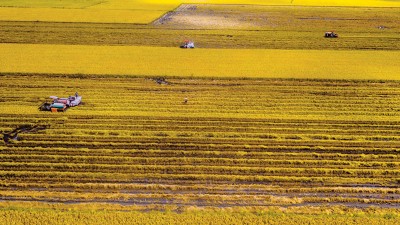
For example, Vietnam will host the next APEC Summit, in Phu Quoc in November 2027. Though France is not an APEC member, it has been invited to contribute to the preparations through an organization that brings together researchers, businesses, and local authorities. Our work focuses particularly on helping Southeast Asian countries prepare for climate shocks. This is a major priority for Vietnam, which is among the countries most vulnerable to climate change due to its extensive coastline and large agricultural areas, particularly in the Red River Delta and the Mekong Delta.
That is what I wanted to emphasize: we have a very solid foundation for cooperation, which we are putting at the service of Vietnam’s development priorities and our shared interests. Research conducted in Vietnam is also valuable to France and the rest of the world.
Furthermore, we are seeking to be present in all sectors that Vietnamese authorities currently consider priorities, whether infrastructure, transport, or, of course, energy. France, and Europe more broadly, is fortunate to have major industrial leaders in each of these fields. France also has traditionally maintained a strong presence in several other sectors, particularly pharmaceuticals, luxury goods, and agribusiness.
In conclusion, we intend to preserve and deepen our traditional areas of cooperation while becoming more actively involved in the sectors that are essential to the Vietnamese economy today.
- What obstacles are still holding back French companies operating in Vietnam, and what changes would you like to work on with Vietnamese authorities to address them?
The obstacles are of several kinds. Many French companies entered the Vietnamese market very early, in the early 1990s. At that time, the market was not yet fully prepared to accommodate such a large volume of foreign investment. Today, the situation is different. Countries across the region, as well as many others around the world, are keen to invest in Vietnam. France must also ensure that it has a strong presence here.
We may have fallen slightly behind, but we are nevertheless well established. Around 250 French companies operate in Vietnam, and all 40 of the largest French companies listed on the CAC 40 (the benchmark French stock market index) have subsidiaries here.
Regional countries such as Japan, South Korea, Singapore, Thailand, and China have greater capacity to establish and expand their presence in Vietnam. Much of the country’s exports are produced by foreign-invested enterprises that have relocated operations here. From France’s perspective, at the request of Vietnam’s highest-level authorities, our approach today is not simply to produce in Vietnam, but to produce with Vietnam and for Vietnam, within a genuine partnership.
Returning to the obstacles, Vietnamese authorities have a very clear political commitment to diversifying their sources of supply, particularly in the areas of security and defense. We will have an opportunity to discuss this further, as these are complex and sensitive issues that require time.
Entering the Vietnamese market can sometimes involve relatively high initial costs. However, these are gradually declining as an increasing number of highly-qualified Vietnamese executives become available to help us establish and develop our presence in the market. What we have built in the past is now an asset for the future.
Another potential obstacle for French companies, as well as for foreign investors more broadly, concerns energy infrastructure, as I mentioned earlier. When a country is targeting double-digit economic growth, it must be able to provide considerably greater energy and electricity generation capacity. This is a major challenge. I believe the pace at which FDI can grow will depend, in part, on how this challenge is addressed.


 Google translate